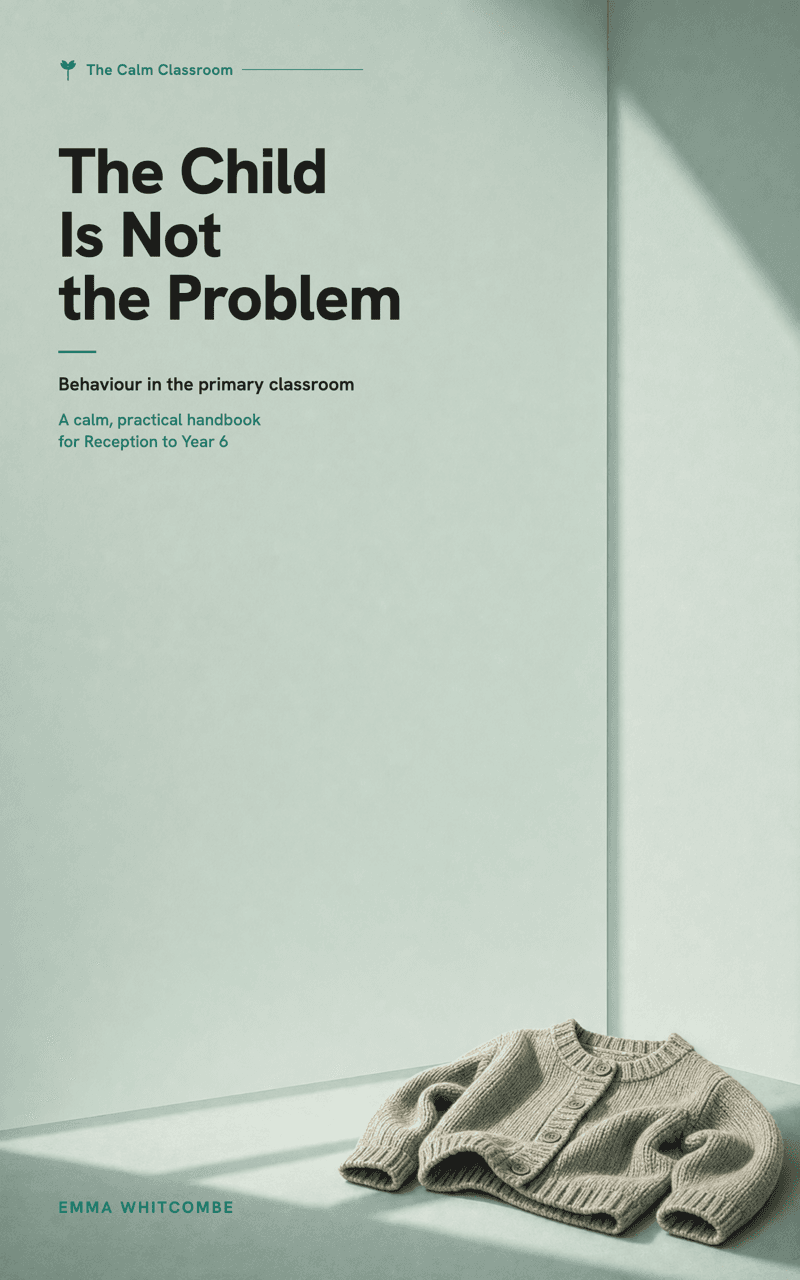
The Child Is Not the Problem
Behaviour in the primary classroom — a calm, practical handbook for Reception to Year 6.
Behaviour plans, parent-meeting scripts and classroom templates — every printable tool in the book. Instant PDF download, plus a link emailed to keep.
Buy the e-book — £14.99Every printable included · no VAT · instant PDF download
Secure checkout with Stripe · card, Apple Pay, Google Pay, PayPal & Klarna. File won’t open? I’ll replace it.
What this one’s for
The defiance. The meltdown nobody saw coming. The quiet refuser at the back you can’t reach. Behaviour is a language — and once you can read it, the classroom changes. The do-it-Monday handbook for primary teaching: step-by-step scripts, ready-to-use checklists and calm responses you can use before first break.
- Read what behaviour is really telling you
- Verbatim scripts for the moment it kicks off
- Know when a concern becomes a safeguarding matter
Behaviour plans, parent-meeting scripts and classroom templates — every printable tool in the book.
Who is this book for?
The Child Is Not the Problem is for primary teachers, teaching assistants and SENCos in England, from Reception to Year 6, with one or two children who tip the whole room. It covers meltdowns, quiet refusal, hitting, the class clown and working with parents, with the exact words to use and every printable tool included.
What’s in the book
- You’re not the problem — and neither is the child
- Behaviour is a language
- The first six weeks decide it — preventive classroom management
- Meltdowns, tears and flat refusal — self-regulation in Reception to Year 6
- The meltdown in real time — acute de-escalation
- The quiet refuser — spotting silent distress
- The child who hits — aggression towards other pupils
- The constant disrupter and the class clown — the attention economy of the class
- When the whole class tips — group dynamics and a fresh start
- Getting parents on side
- You’re not on your own — the support network and who does what
- When it needs more — warning signs, assessment and safeguarding
- Acting within the law
- Staying composed, staying well
- When there’s more going on: ADHD, autism and trauma in the classroom
- Spotting and stopping bullying in primary school
- Relationship as method — presence, new authority and the daily craft of connection
- Transitions, cover and crisis days — when the structure falls away
Free templates from this book
These printables come with the e-book. You can also use them on their own, free:
- De-escalation script card for teachers
- Behaviour incident log template
- ‘Is this one for the DSL?’ prompt sheet
- Parent meeting planner for behaviour
- First weeks classroom management planner